
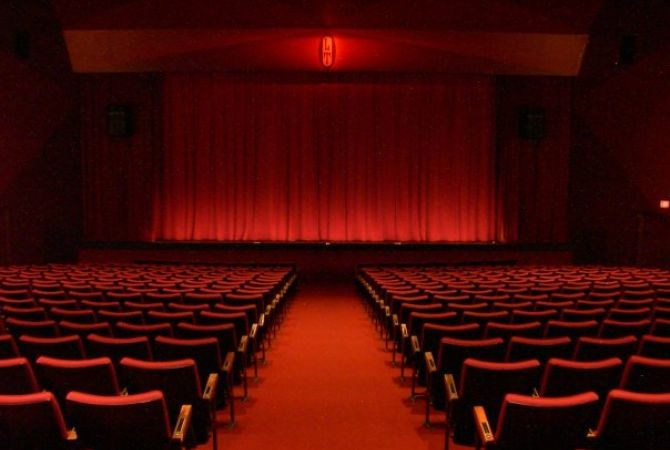
<<Goris Dramatic Theater after V. Vagharshyan>> SUBJECTS The background to the formation of the Goris Theater: people, tradition, stage thinking** Armenian culture, which has remained an integral part of the spiritual face of the nation for centuries, has its roots in such depths that precede not only the Armenian statehood, but also the cultural contacts of the Hellenistic world. Although it is customary in scientific circles to assign special importance to the Hellenistic era regarding the origins of Armenian theater, the reality is that the Armenian people carried the first comprehensive embryos of stage thinking and performing arts in their everyday and ritual traditions, forming original concepts of the concepts of stage, role and audience. An important branch of this broad and multi-layered national land stops in Goris, a city whose theater has become part of not only the regional, but also the national cultural heritage. The history of the centuries-old settlement of Goris has come down to us not only in written records, but also in the form of cave urbanism, the rock-cut structures of ancient Goris. Here, in the hollow of the rocks, a unique place has been preserved, which has remained in the folk memory as a rock-cut theater. It was not only a unique architectural monument, but also a space for living art, where folk actors, musicians and winemakers performed their songs, stories and games in front of the audience, creating an environment that already at that time bore the logic of a stage and an auditorium. Mushegh Adunts, a distinguished teacher of the Armenian SSR who worked for many years at the local old school, testified that competitions, performances, and song plays were constantly organized in this cave theater, in which the local Gusans not only sang, but also presented project episodes with elements of role-playing. This proves that the people of Goris, even in the absence of state institutions, had mastered stage imagery, unconsciously preparing the groundwork for the future theater. The memories of the elderly in Goris have also preserved the stage activities of the pre-revolutionary period. In 1912–1918, amateur theater groups already operated in Goris, which presented the most popular and beloved plays of the time to the audience of the city and surrounding villages. These were not accidental associations, but groups with cultural potential, inheriting the traditions of the rock-cut theater and adapting them to the artistic perceptions of the new era. The establishment of Soviet power in Armenia (1920s) was a new stage for theatrical life, where the state tried to support the revitalization of cultural life. Goris also did not remain outside this movement, becoming a center of multidimensional theatrical activity. Starting from approximately 1922, amateur, unofficial theater groups were created both in the city and in Tatev, Shinuhayr, Khnatsakh, Karahunj and neighboring settlements, which held rehearsals in private homes and performed during neighborhood celebrations. Arshak Manucharyan, the head of the Goris theater department and the bearer of the creative spirit, had a special place in the creation and maintenance of these groups. A creative breakthrough occurred in the second half of the 1920s. Famous actors Jasmen and Hovhannes Abelyan arrived in Goris, whose touring performances were a cultural sensation in the region. Their stage skills not only had a great influence on the participants of the amateur acting groups, forming new artistic standards, but also created an atmosphere where the demand for art grew, gradually crystallizing the taste of the audience. During this period, such works as “Anush”, “For Honor”, “Living Dead”, “Marriage”, “Verdict” and other plays appeared on the stages of Goris. These performances not only strengthened the professional vision of the actors, but also gave the audience a new perception of the stage, raising the cultural value of theatrical art throughout the region. The village councils created in 1923–24 and the collective farm movement in 1929–31 significantly multiplied the number of theatrical groups. Rural clubs, collective farms and administrative bodies acted as a supporting force, providing material and moral support. In Goris and the surrounding settlements, the theater became not only a disseminator of art, but also an important factor in socio-cultural consolidation. In 1931, Bagrat Aleksanyan came to Goris from Baku and was appointed head of the professional club. Under his leadership, a theater troupe was formed, which became the foundation on which the Goris State Theater would later be built. The theater troupe was replenished with new talents: Vagharshak Khurshudyan, Seryozha Karapetyan, Kalantar Kalantaryan, Hamo Ghazaryan, Misha Yolyan, Iskuhi Hakobyan, Arevhat Nazaryan and others. Their voice, energy and creative approach reorganized the stage life of Goris, making it more organized and artistically stable. During this period, works by Morgan, Shirvanzade, Sundukyan and other authors were staged, which shaped
The early aesthetics of the Goris theater. Theatrical life of Goris in the 1930s–1940s: nationalization and professionalization**The 1930s are perceived in the theatrical life of Goris as a period of integrity and systematization, when the early self-made groups began to gradually unite around the requirements of professional staging. The cultural policy of the Soviet government aimed not only to spread socialist ideas, but also to raise the quality of culture by including theater groups operating in the smallest settlements under state patronage. Goris was a separate but important zone of this policy, as it combined traditional Armenian stage culture and the requirements of the latest Soviet direction. In those years, the first professional theater group was created in the city, and Bagrat Aleksanyan, the head of the professional group until then, was appointed its head. Under his leadership, the systematization of stage processes and management principles took place, which created the basis for the formation of the theater base. The group was replenished with young actors who had graduated from Yerevan or Tatev theater schools, but without losing their local ethnocultural memory, they brought a unique localized psychological and aesthetic face to the Goris stage. One of the most important achievements of this period was the modernization of the technical equipment of the stage: operational teams of performance direction, lighting, music and masquerade were formed, which allowed to increase the volume and complexity of the performances. In the first years, works by Mikael Nalbandyan, Hrachya Nersisyan, Stepan Shahumyan and other classics were staged, which in the new situation received modern social accents, bringing people closer and reflecting the changes in public life. Starting from 1935, the Goris theater troupe began to be included in theater festivals of the region and the republic. Participation increased not only the professional reputation of the group, but also the urban cultural taste of Goris. The works presented at festivals often enjoyed high praise, being a source of inspiration for cultural workers from other regions. These years also saw the formation of the first generation of professional actors of the theater: Vagharshak Khurshudyan, Seryozha Karapetyan, Iskuhi Hakobyan and other young people received their first experience on the big stage, gaining both technical and role knowledge. This period was also important from the point of view of the social mission of the performances: the performances began to reflect on the everyday life of workers and peasants, social justice and public moral values, which were in accordance with the cultural agenda of the Soviet state. However, they also preserved the charm of local tradition: folk songs, chronicles and stage humor, which created the inexplicable original style of the Goris theater. Although state support was great, the activities of the theater troupe were not without difficulties. The constant concentration of financial resources, territorial distance and the lack of professional personnel subjected the creative potential of the group to tests. In these conditions, the group developed effective methods of self-organization, where each actor, technical staff and director worked together towards a common goal — to create high-quality and understandable performances for the people. This period also became an important stage of university connections and training for the Goris Theater. Young people were often sent to Yerevan to participate in short-term theatrical training courses, lectures and professional experience exchange programs. Thus, the Goris Theater gradually acquired not only theoretical, but also practical opportunities that were necessary for long-term professional activity. The Goris Theater of the 1940s–1950s — a period of war and post-war trials** In the early 1940s, the Goris Theater faced extraordinary and difficult trials, when the whole country was involved in the challenges of World War II. During these years, the theater lost part of its primary professional generations, as many young actors and technical staff were drafted to the front. However, the theater did not stop its activities, on the contrary, it acted as a serious social and cultural institution that supported the urban and rural population in the most difficult conditions. During the war years, the themes of the performances fully corresponded to the requirements of the time: the performances preached patriotism, solidarity and the ideas of sacrifice, presenting heroic stories in both real and literary interpretations. This period was also distinguished by the deepening of the local originality of the theater, when traditional folk songs, poetry and humor were introduced into the performances, making them understandable and accessible to the broad masses of society. In the post-war years of 1945–1950, the Goris Theater faced new tasks: the war It became one of the main players in the process of mitigating the damage, spiritual recovery of the people and the restoration of cultural life. During these years, a group of professional actors of the second generation was created, who, as a result of training and experience, were ready to take on the main roles and replenish the technical team. The new generation brought to the stage not only professionalism, but also a new creative breath, trying to combine modern Soviet trends and the traditional culture of Goris. War-related absences and material limitations forced the theater to develop mini-staging methods, when performances with small ensembles but with deep ideas were staged, using limited props, light and small sound solutions. This creative flexibility and intelligent use of resources became an important basis for the sustainable development of the Goris theater in the next decade. This period also saw the popularization and spread of theater in rural communities. Dozens of tours were held in neighboring villages, where the performances not only provided access to art, but also played an educational role, strengthening the ideas of solidarity, spiritual and moral values in society. As a result, the Goris Theater became the cultural center not only of the city, but of the entire region, influencing the lives of thousands of people with its performances and educational activities. The involvement of the new generation, overcoming the trials of war, and creative flexibility led to the fact that by the end of the 1950s, the Goris Theater was already striving for a relatively high professional level and could offer performances that passed regional and republican theater competitions. At this stage, long-term traditions of the theater were also established, emphasizing not only the technical perfection of the performances, but also the ideological and social messages conveyed to society. The rise and innovations of the Goris Theater in the 1960s–1970s** From the beginning of the 1960s, the Goris Theater entered a period of its active and creative growth, when the war and post-war trials remained in the background, and the stage was able to focus not only on social and ideological issues, but also on artistic self-expression. During this period, the theater’s activities were aimed at creating new productions, innovating the style of performances, and improving acting, which forced the troupe to continuously review its stage strategy and technique. In the 1960s, great attention was paid to subtle acting and psychological deepening. Previously, performances with a more social and ideological content began to be combined with an emphasis on the development of individual roles, inner feelings, and individual heroism. This new approach contributed to the impressiveness of the performances and the spiritual involvement of the audience. Community activities also expanded significantly during this period. The Goris Theater began to organize community events, art courses, and open classes for school and student communities. The theater became not only a center for performances, but also an educational platform that introduced young people and children to the basics of theatrical art, stage culture, and the importance of creative thinking. In the 1970s, new authors' works were also staged, which, although considered experimental to some extent, raised the creative level of the theater and the public’s interest. They included contemporary social issues, psychological drama, and issues of national identity, demonstrating the theater’s innovative spirit and thoughtful approach to contemporary themes. The technical level of the theater also increased significantly during this period: stage lighting, sound equipment, stage sets, and props were improved. All this created the conditions when actors could present their art in more vivid and diverse ways, and the audience received a full sensory and emotional experience. One of the most important achievements of this period was the international and republican recognition of the theater. The performances of the Goris Theater began to participate in various competitions, receive awards and be recognized as an important center of art in the region, which also contributed to the involvement of a new generation of actors and creative people. Thus, the 1960s–1970s are characterized in the history of the Goris Theater as a period of creative upsurge, technical perfection and community involvement, which laid the foundations on which the theater’s activities continued to develop in subsequent decades. Developments, difficulties and modern challenges of the Goris Theater in the 1980s–2000s** In the 1980s, the Goris Theater faced many new challenges and trials, which were associated with both social and economic changes. The signs of the collapse of the Soviet Union and the ongoing crises in the post-war periodwere also reflected in the cultural sphere: limited financial resources, severe restrictions on the resources of the theater management, and the search for new creative paths became the main problems. Nevertheless, in these difficult conditions, the Goris Theater maintained its creative spirit and cultural mission. The cast continued to participate in the creation of new productions, search for interesting and modern dramatic works, thanks to which the audience did not lose interest and continued to visit the theater. In these tense working conditions, the cooperation of the acting team and the flexibility of the management became especially important in order to preserve and develop the theater in emergency situations. An important development in the 1980s–1990s was the strengthening of direct contact with the audience. The Goris Theater began to organize open repertoire performances for groups of any age, work with schools and youth organizations, and create permanent community projects that contributed not only to the spread of art, but also to the formation of theater culture among the younger generation. In the late 1990s, along with independence and economic difficulties, the theater began to more actively engage in the use of new technologies and stage solutions. New stage decorations, modern lighting and sound equipment, as well as the use of multimedia created a new experience for the audience, which made it possible to give the performances a more intense and modern charm. It is necessary to note that during this period, the staging of Armenian literature and modern dramaturgy was especially encouraged. National identity, historical memory and contemporary social issues became the main themes of the theater, which contributed to the involvement of society and the vivid presence of the theater in the region. The theater’s activities in the 1980s–2000s showed that, regardless of financial or organizational difficulties, the creative team can maintain a high level of art and the interest of the audience, while forming the foundations on which the professional level of the modern theater of Goris was later developed. This period is considered one of the important stages in the history of the theater, where experience and persistent work ensured continuity and the opening of new creative opportunities. The theater of Goris in the 21st century has come a long and difficult path, while simultaneously preserving its cultural traditions and trying to keep up with the times. Today, it is not limited to classical performances. The theater’s repertoire includes modern dramaturgy, performances highlighting national issues, as well as small avant-garde projects that experiment with new forms and techniques. The theater’s current activities are marked by cooperation with international and local organizations, participation in performances and international festivals, which allows the Goris Theater to gain wider recognition and exchange creative experience. Audience participation and interest are increasing, which indicates the strengthening of the theater’s social significance. One of the features of the theater of our time is the integration of technologies into performing arts. Modern systems of light and sound, the introduction of video and multimedia allow us to create more saturated and interesting performances that especially attract young audiences. The following directions are important for the development of the coming years: first, the expansion of programs to involve young creators and develop their skills; second, the creation of new performances that address contemporary social themes and issues of national identity; and third, the expansion of community programs to strengthen the connection between theater and the audience. In general, the Goris Theater, taking into account its historical path, has become not only a cultural center of the region, but also a creative environment, where classical traditions are preserved and innovative approaches to contemporary art are combined. This theater proves that in difficult conditions it is possible to develop the level of cultural life, create a diverse and high-quality repertoire, and at the same time become the main platform for community and youth engagement.